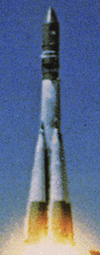
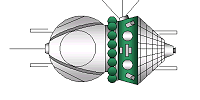
Vostok 5Spacecraft:3KA-7 Launch Vehicle: Vostok 8K72 Launched: 14 Jun 1963 |
Prime Crew |
Description: 1st Vostok 3KA SL-3 manned orbital of 2nd dual flight |
 |
 |
 |
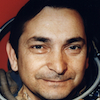
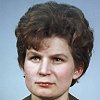
V F Bykovskij 
|
Backup Crew |
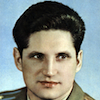
B V Volynov
|
|
|
||||||||
|
|
|
||||||||
|
The Soviet Union launched Vostok 5, piloted by Lt. Col. Valery F. Bykovsky. Two days later Lt. Valentina V. Tereshkova followed in Vostok 6. On its first orbit, Vostok 6 came within about five km of Vostok 5, the closest distance achieved during the flight, and established radio contact. Both cosmonauts landed safely on June 19. The space spectacular featured television coverage of Bykovsky that was viewed in the West as well as in Russia. Unlike earlier missions, only a black and white film camera was carried. Photometric measurements of the earth's horizon were made. Mission objectives were officially: further study of the effect of various space-flight factors in the human organism; extensive medico-biological experiments under conditions of prolonged flight; further elaboration and improvement of spaceship systems. Vostok 5 was originally planned to go for a record eight days. The launch was delayed repeatedly due to high solar activity and technical problems. Finally the spacecraft ended up in a lower than planned orbit. Combined with increased atmospheric activity due to solar levels, Vostok 5 quickly decayed and temperatures in the service module reached very high levels. Bykovsky also experienced an unspecified problem with his waste management system (a spill?) which made conditions in the cabin 'very uncomfortable'. He was finally ordered to return after only five days in space. Once again the Vostok service module failed to separate cleanly from the reentry sphere. Wild gyrations ensued until the heat of reentry burned through the non-separating restraining strap. Tereshkova was the first woman in space, and the only Russian woman to go into space until Svetlana Savitskaya 19 years later. The Soviets took no interest in recriuting women until the United States planned to fly women aboard the Space Shuttle. Vostok 6 flight objectives included: Comparative analysis of the effect of various space-flight factors on the male and female organisms; medico-biological research; further elaboration and improvement of spaceship systems under conditions of joint flight. Korolev was unhappy with Tereshkova's performance in orbit and she was not permitted to take manual control of the spacecraft as had been planned. Both pilots ejected after re-entry and descended under their own parachutes, as was planned. However for many years the Soviet Union denied this, because the flights would not have been recognized for various FAI world records unless the pilots had accompanied their craft to a landing. From August 1962 until February 21, 1963 it was planned that Vostok 5 and 6 would take place in March-April 1963 and be a dual female flight. Valentina Tereshkova would be pilot for Vostok 5, and Valentina Ponomaryova was considered most qualified candidate for Vostok 6. This dual female flight plan was approved all the way up the Soviet hierarchy until it was killed at the last moment at a meeting of the Presidium of the Communist Party on 21 March 1963 by party ideologue Kozlov and Ministry of Defence Chief Ustinov. Only one female would be allowed to fly for propaganda purposes. A male cosmonaut (Bykovsky) was rushed into final training, delaying the dual flights for two months. Tereshkova made it into space aboard Vostok 6, following Bykovsky aboard Vostok 5. Ponomaryova and three other female cosmonauts trained in the 1960's never flew. Ponomaryova's flight is sometimes referred to as a canceled mission; more accurately, the same mission was performed with a different crew. The mission insignia shown above is post factum. References:
|