Mercury Atlas 10Spacecraft:S/C-15B Launch Vehicle: Atlas 144-D Scheduled Launch: 1 Oct 1963 Last Scheduled: 1 Oct 1962 |

Prime Crew |
Description: 2nd Mercury Atlas manned extended orbital |
 |
 |
 |

A B Shepard 
|
Backup Crew |
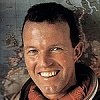
L G Cooper
|
|
|
||||||||
|
| On July 27, 1961 NASA met with McDonnell engineers to discuss modification of the Mercury spacecraft for Project MODM (Manned One-Day Mission). On October 25, 1961 NASA authorized McDonnell to proceed with the modification of four capsules and associated testing to support four manned MODM flights beginning in late 1962 and finishing by the end of 1963. From then until April 1962 NASA's Mercury program plan included four one-day flights in 1963: MA-10 through MA-13. But by October 1962 the decision was taken to cancel the last short-duration flight and move directly to the one-day flights. Therefore Cooper's MA-9 flight switched capsules from the short duration SC19 to the long-duration SC20. By this time the decision had been quietly taken to limit the long-duration flights to only MA-9 and MA-10 (SC15B). There were several good reasons for this. The Mercury program was behind schedule and it would be difficult to fly more than two long-duration flights before the mandated completion of the program at the end of 1963.
Due to budgetary pressures to shut down Mercury and move funds and workers to the Gemini program, NASA and the Mercury managers had to decide whether to undertake another flight after Cooper's planned 22 orbit Mercury Atlas 9. By May 11, 1963 Julian Scheer, the new NASA Deputy Assistant Administrator for Public Affairs, announced 'It is absolutely beyond question that if this shot (MA-9) is successful there will be no MA-10.' But at the end of Cooper's flight there was enough oxygen remaining for five days, six days left until his capsule decayed from orbit, and enough attitude control propellant for another two days. Walter Williams, Alan Shepard, and others at MSC pushed for a three to six day Mercury 10 endurance mission. This would give America the manned space endurance record for the first time and also cover the biological objectives of the first two Gemini missions. The Mercury 15B capsule had already been modified for long-duration flight and Shepard had the name 'Freedom 7 II' painted on the side. But the risk and work pending on Gemini persuaded NASA managers not to undertake another mission unless Mercury Atlas 9 failed. The massive breakdown of nearly all systems aboard Mercury Atlas 9 convinced NASA that this was the right decision. On June 12 NASA administrator James Webb told Congress that there would be no Mercury Atlas 10 mission. It would have only cost $ 9 million to fly the mission, but deleting it freed up 700 workers to concentrate on project Gemini, which was behind schedule and over budget. On June 13 McDonnell's remaining contract work for Mercury was terminated. Had the mission proceeded, it would have launched in October 1963. By this time Shepard was experiencing dizziness from what was soon diagnosed as Meniere's syndrome. He was removed from flight status in October 1963, thus it might have fallen to Cooper as backup pilot to assume the mission, in which case he would have flown back-to-back missions to close out the Mercury program.. References:
|