ASSET 4Spacecraft:AEV-1 Launch Vehicle: Thor Launched: 28 Oct 1964 |
|
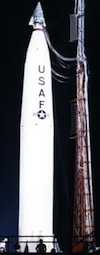
Description: 1st ASSET AEV Thor subscale suborbital |
 |
 |
 |
|
|
|
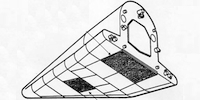
ASSET, or Aerothermodynamic Elastic Structural Systems Environmental Tests was an experimental US space project involving the testing of an unmanned subscale reentry vehicle. The project was the second part of the USAF START (Spacecraft Technology and Advanced Re-entry Tests) program. Begun in 1960, ASSET was originally designed to verify the superalloy heat shield of the X-20 Dyna-Soar prior to full-scale manned flights. Begun in 1960, the ASSET was originally designed to verify the superalloy heat shield of the X-20 Dyna-Soar prior to full-scale manned flights. The vehicle's biconic shape and low delta wing were intended to represent Dyna-Soar's forward nose section, where the aerodynamic heating would be the most intense; in excess of an estimated 4,000 ¡F at the nose cap. Following the X-20 program's cancellation in December 1963, completed ASSET vehicles were used in reentry heating and structural investigations with hopes that data gathered would be useful for the development of future space vehicles, such as the Space Shuttle. Built by McDonnell, each vehicle was launched on a suborbital trajectory from Cape Canaveral's Pad 17B at speeds of up to 6,000 m/s before making a water landing in the South Atlantic near Ascension Island. Originally, a Scout launch vehicle had been planned for the tests, but this was changed after a large surplus of Thor and Thor/Delta missiles (returned from deployment in the United Kingdom) became available. The ASSET vehicles were of two types. The Aerothermodynamic Structural Vehicles (ASVs) launched on Thor/Deltas and the Aerothermo Elastic Structural Vehicles (AEVs) launched on Thors without an upper stage. AEV 1 achieved an altitude of 50 km and a speed of 4,000 m/s. It survived reentry and all mission goals were met. No recovery was intended. References:
|
